On the odontogram you write, tooth by tooth, what you find on the day of the visit: which tooth it is, which surfaces have caries or a filling, and whether the tooth is missing, is an implant, has a crown, is devitalised or is to be extracted. A healthy tooth has nothing to write. When the status changes you do not correct the old line: you save another snapshot, with its date.
A map that no rule calls by name
The Clinical recommendations in odontostomatology of the Ministry of Health (opens in a new tab) (2017 edition) list the ideal clinical documentation: relevant medical, dental and social history, adverse reactions to products and materials, dental, periodontal, occlusal and oral hygiene conditions, reason for the visit, treatments performed, radiographs, correspondence. The text premises «where the rule makes it mandatory» without saying which rule. It is described good practice, not a legal obligation.
The code of medical ethics (opens in a new tab) applies to the medical surgeon and to the dental practitioner (art. 1). Art. 26 requires that the record set out history and objective data with completeness, clarity and diligence, and that corrections be justified and signed.
A review on the dental record (opens in a new tab) (2014) says what it is for: following treatment over time, checking the outcome, handing the case to a colleague who takes over from you, defending yourself in a dispute, and sometimes identifying a person for forensic reasons. At the first visit you make a baseline picture of everything you observe, then update it regularly.
26 is 26 for everyone
The FDI notation, which coincides with standard ISO 3950, uses two digits: the first is the quadrant, the second the tooth. Permanent teeth run from 11 to 18, from 21 to 28, from 31 to 38 and from 41 to 48. A 2017 study (opens in a new tab) describes it as the system that avoids confusing right and left, upper and lower, and recalls that different systems give the same tooth different numbers. Among the risk factors for error the authors include unclear notation, mixed dentition and the missing molar.
Notations really do coexist. In a survey of 543 dentists in South India (opens in a new tab) (2018) 50.3 per cent wrote the number in FDI, 33.6 with Zsigmondy and Palmer, 15.4 with the universal notation. Foreign data, it says nothing about Italy. It is enough to explain why, in a record that passes between colleagues, laboratories and radiologists, the system is chosen once and not changed.
Fibonacci uses FDI: 32 permanent teeth and 20 deciduous on the same grid.
Surface or whole tooth
The program separates what concerns a face from what concerns the tooth.
| Level | What you choose |
|---|---|
| Surface (mesial, distal, buccal, lingual or palatal, occlusal or incisal) | «caries» or «filling» |
| Whole tooth | «missing», «implant», «crown», «endodontics» (devitalised tooth), «to be extracted» |
Five surfaces per tooth. On anterior teeth the one that chews is called incisal; on teeth of the upper arch the side towards the tongue is palatal. «Missing» and «implant» exclude the surfaces: a tooth that is not there no longer has a mesial face on which to write caries. There is also a free note, for everything the two lists do not say.
Here the program simply records: no score, no index such as ICDAS, no advice inferred from the data. If you have your own criterion for describing a lesion, you write it in the note.
Healthy, or not looked at?
A healthy tooth has no card, and silence means «nothing to record». Someone reading two years later, however, does not know whether you examined that tooth. The Malaysian guidelines cited by the 2024 study want every tooth included. If for you silence must mean «examined and healthy», write it once in the note: «examination of all present teeth». The date of the snapshot says when.
In March caries, in October a filling
The status of a tooth on a given date is a fact. Tooth 26 with distal caries in March and the filling in October are not two versions of the same fact: they are two facts. This is why the odontogram is not modified. Every save is a new snapshot, and the previous ones remain readable as they were.
It shows on the day someone asks what was recorded on a given date. The 2014 review recommends correcting an error with a line above, openly, and never deleting or altering after the fact. With snapshots you delete nothing: if 48 was «to be extracted» and is now «missing», you save the new one and write in the note why it changed. The code speaks of corrections «justified and signed»: you provide the justification, the program keeps the history.
Two snapshots of the same patient (sample data, invented):
| Tooth | 12 March | 14 October |
|---|---|---|
| 26 | distal: caries | distal: filling |
| 36 | endodontics | endodontics |
| 37 | missing | missing |
| 48 | to be extracted | missing |
| Note | examination of all present teeth | 48 extracted on 20 September |
Under the map, the plan
Under the odontogram sits the treatment plan by tooth. Each item of the estimate has a description, priority («essential» or «desirable», you choose), number of sessions, cost and, if you wish, the tooth in FDI with the surfaces: «26 MOD». The tooth you tap already carries the written item, and those with items in the plan have a mark. The plan is saved in the record as a proposal, in draft. Whether the patient has accepted it, the program does not know. How to set up a plan is in treatment plan and dental estimate.
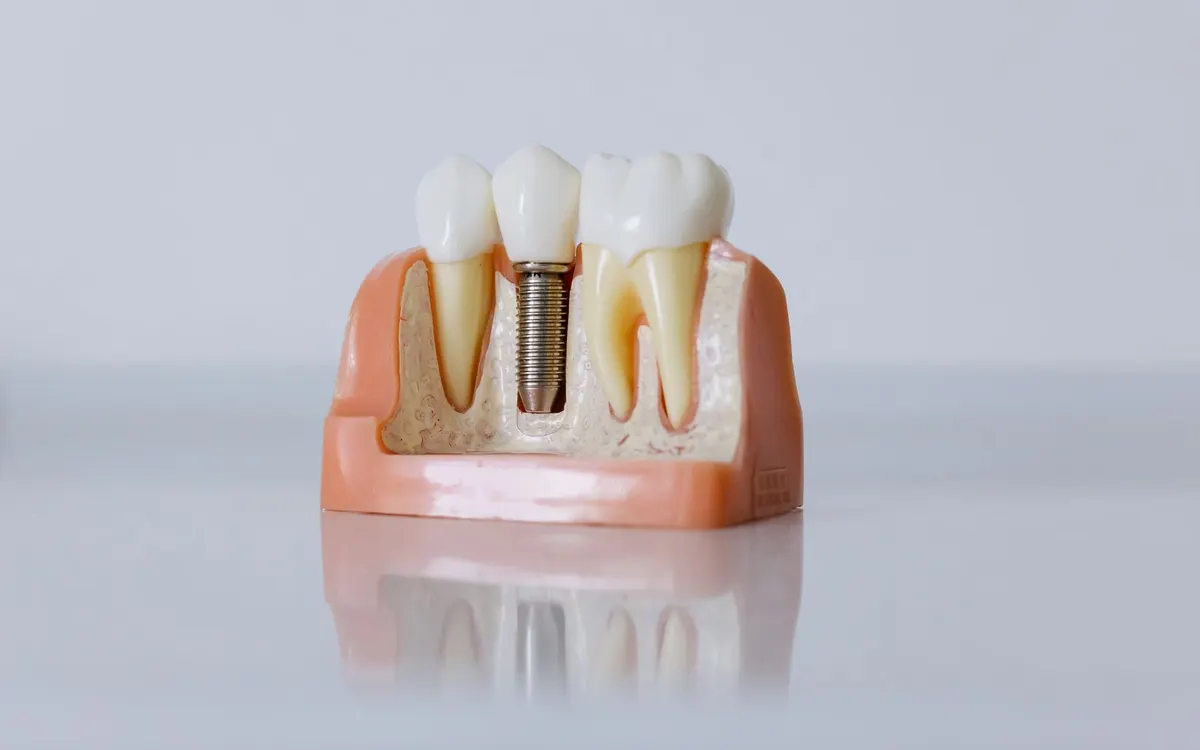
An implant on the odontogram is the status of the tooth. Manufacturer and lot are in the implant register, where the lot is mandatory: if a lot recall requires it, from «Who received it» in stock you can trace who received that lot.
To check at the end of the session
- The numbering is FDI everywhere, including in notes and letters to colleagues
- At the first visit the odontogram covers all present teeth, and the note says you examined them
- A surface is «caries» or «filling»; the rest goes in the note
- Missing, implants, crowns, devitalised and to be extracted sit on the tooth, not on the surfaces
- If the status has changed, a new snapshot and the reason written
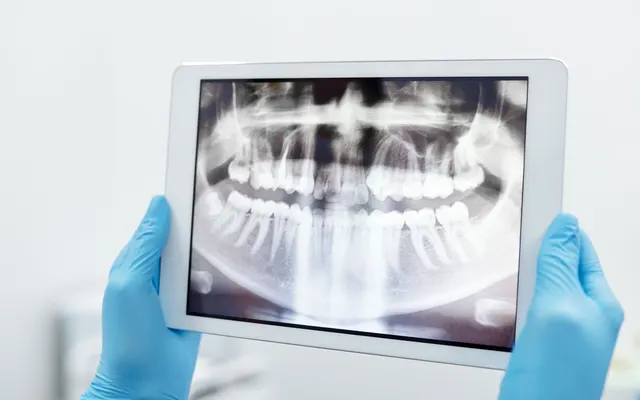
- Radiographs and their report are in the record: photos and radiographs in the dental record
- The treatment plan takes up the teeth of the odontogram, with the surfaces
- For the periodontium there is a dedicated record: periodontal record
The clinical record keeps the odontogram together with history, consents, photos and radiographs. How long practice documents are retained is in retention of dental documentation.