In a dental practice's storage cupboard, alongside the record card, sit the radiographs, the models and impressions, the declaration the laboratory sends with each prosthesis, and the implant lot numbers. For the record card and the consents, the open sources for this article give no number of years: the horizon is one you choose with the practice's lawyer and write down. The only numbers that exist come from other countries, or are written for the device manufacturer, who as a rule is not you.
The rest of the cupboard
An introduction to dental records lists the pieces that make them up: written notes, radiographs, study models, referral letters, consultant reports, clinical photographs, special examinations, drug prescriptions, laboratory prescriptions, personal data and medical history (Dental records: An overview, 2010 (opens in a new tab)). In a dental practice four of these items weigh more than the others.
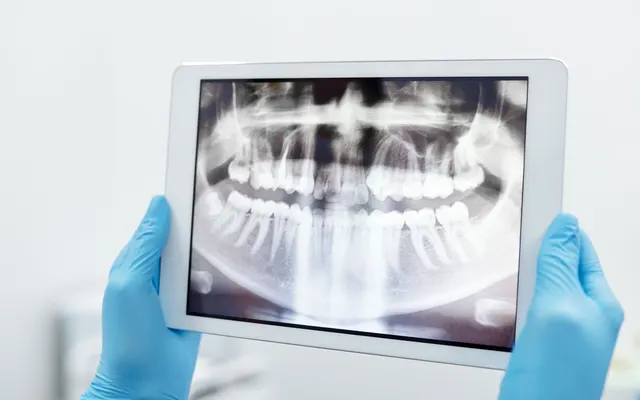
Radiographs and reports. Art. 168 of Italian Legislative Decree 101/2020 (opens in a new tab) provides that examinations and the main technical parameters be recorded individually on electronic media. There is no number of years for images in the articles cited here. What to write for each examination is in photos and radiographs in the dental record.
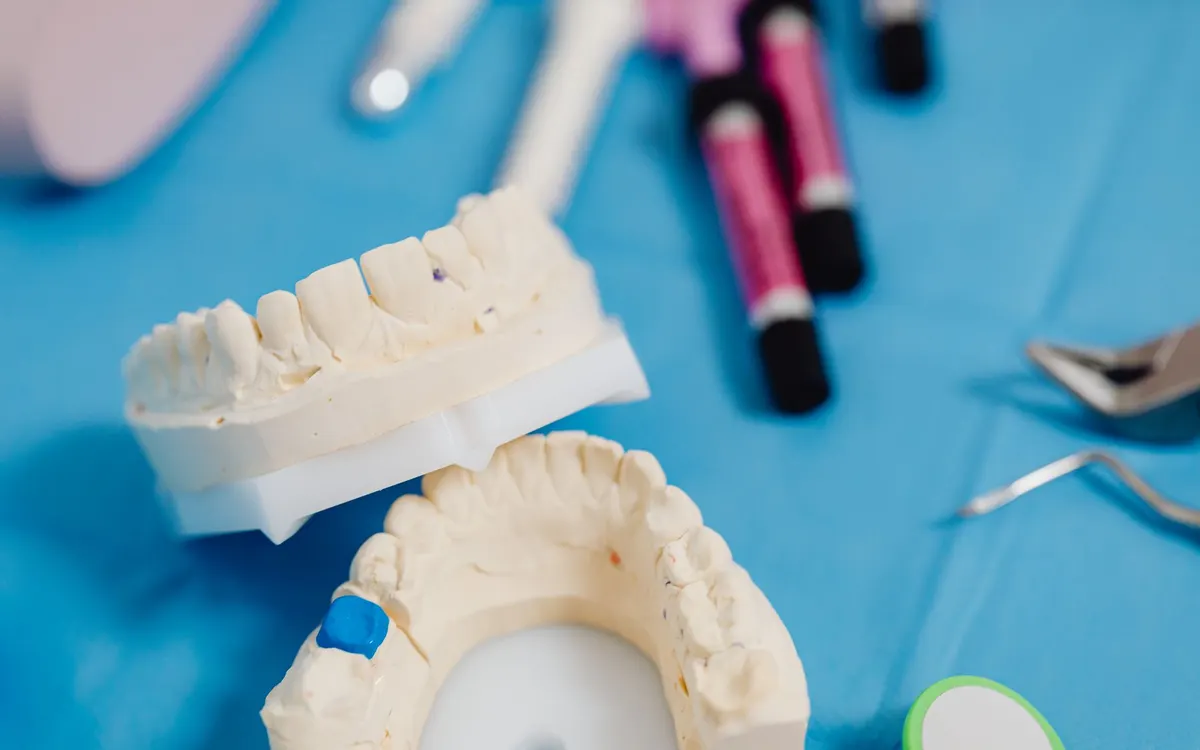
Models and impressions. From these the laboratory prescription starts; in orthodontics they are also the before-and-after comparison.
Laboratory declaration. It arrives with every prosthesis made for the individual patient.
Implants. Tooth, date, manufacturer, lot, UDI.
The years, according to England and Nova Scotia
Those who write about dental records in scientific journals give numbers, but they are from other countries: they should be read as a comparison, not as an Italian obligation.
- In England, for National Health Service facilities, community dental records are kept for 11 years for adults and children, or until the patient is 25 if that term is longer (PMC3970394 (opens in a new tab)).
- In Nova Scotia the basic period is 2 years from the end of treatment, with exceptions: for minors it does not run until the patient reaches the age of majority. The paper derives from this, as a prudent rule for the profession, 10 years.
- The 2010 overview reports the advice of English professional defence organisations: records, radiographs, study models and correspondence for 11 years from the end of treatment, up to 25 years for children. Original orthodontic models, before and after, forever; intermediate ones are discarded after five years (PMC3009547 (opens in a new tab)).
Two things are said by all the texts, in every country. The practice must have a written retention rule that the staff know. And it is worth asking the professional liability insurer, who usually has its own recommendations. A plaster model or a file can be photographed or scanned to keep fewer of them, but before converting everything you ask the lawyer and the insurer. When disposing of them, models lose their identifying data and electronic media are rendered unreadable.
The crown that arrives from the laboratory
A crown that the laboratory makes to your prescription is, under Regulation (EU) 2017/745 (opens in a new tab), a device made for a single patient (art. 2, point 3). The questions and answers of the European medical device coordination group give the dental crown as their very example (MDCG 2021-3 (opens in a new tab)).
The prescription is yours and must be in writing. At a minimum it states the patient's name (or a pseudonym) and the specific design characteristics; models, impressions and moulds that accompany it also count as design characteristics. A copy of what you sent stays in the record card.
The declaration is written by the manufacturer. Annex XIII, point 1, lists its content: name and address of the manufacturer and of the manufacturing sites, the data identifying the device, the declaration that it is intended for a single patient identified by name, an acronym or a number, the name of the person who prescribed it, the characteristics indicated in the prescription, and the declaration of conformity with the general safety and performance requirements. Art. 21 requires that the device be accompanied by it and that it be made available to the patient.
Manufacturer is whoever manufactures. Art. 2, point 30, defines it as whoever manufactures or has the device manufactured and markets it under their own name: if the crown is made by a laboratory, the manufacturer is the laboratory. If you mill it in the practice, the manufacturer is you and the obligations of Annex XIII are yours. This is a point to take to the lawyer.
As for duration, point 4 of Annex XIII is in the passive form and does not say who must keep the declaration. Whether the laboratory's is enough for you or you need your own copy is for you to decide with the lawyer. A copy in the record card, in the meantime, lets you answer a patient or an inspection without waiting for the laboratory.
In Fibonacci a device made for a single patient (crown, bridge, prosthesis, appliance) has its own form: laboratory, declared materials, declaration number, and the file uploaded among the patient's documents.
Implant, lot and card
For an implant, art. 18 of the regulation requires the manufacturer to supply with the device the information identifying it (name, serial number, lot number, UDI, model, name and website of the manufacturer), the warnings, the expected service life and the necessary checks, and to deliver a card for the implant holder. Member States require healthcare institutions to make this information available to patients, together with the card showing their identity.
Paragraph 3 exempts certain implants: among others, dental filling materials, orthodontic appliances, dental crowns and screws. Dental implants do not appear in the list. Whether a private practice is a "healthcare institution" within the meaning of art. 2, point 36 (an organisation whose principal purpose is the care or treatment of patients) is a question to take to the lawyer.
Whatever answer the lawyer gives, the record card can have from the outset the same data that the regulation requires the manufacturer to supply. In Fibonacci an implant's record has the teeth, the date, the description, the manufacturer, the lot (mandatory) and the UDI. When a manufacturer recalls a lot, the "Who received it" search in stock shows the patients.
The practice rule, in a table
| Item | Who produces it | What the sources say | What you write |
|---|---|---|---|
| Record card, consents, clinical photos | You | No number of years in the open sources | The horizon and the reason |
| Radiographs and reports | You | Electronic recording (art. 168); no number of years in the articles cited | The same horizon as the record card, unless the lawyer advises otherwise |
| Models and impressions | You and the laboratory | Only foreign comparisons, from 5 years for intermediate ones to forever for orthodontic ones | Which you keep, for how long, how you dispose of them |
| Laboratory declaration | The manufacturer | At least 10 years (15 if implantable), for the manufacturer | A copy in the record card and the number |
| Implant lot and UDI | The manufacturer gives them to you, you record them | Information to be supplied with the device (art. 18) | The complete data in the record |
- A written retention rule exists, and the staff know it
- The insurer has given its view on the periods
- Every prosthesis has the declaration or its number in the record card
- Every implant has lot and UDI in its record
- For models: which to keep and how to dispose of the others
- Before throwing away or scanning, the lawyer has said yes