The treatment plan says what will be done, on which teeth, in what order and under what conditions. The estimate is the part that talks about money, within the same plan. The Ministry of Health's clinical recommendations (September 2017) require the plan to be explained to the patient together with the alternatives, with estimated times and costs, and explained again if it changes. In Fibonacci the items of the dental estimate are written tooth by tooth, with the priority that you choose, and are saved in the record as a proposal: the agreement with the patient is another matter.
The Ministry addresses it by branch, and prosthetics is the most precise
The Ministry (opens in a new tab) text does not have a single chapter on the treatment plan. It addresses it discipline by discipline.
For prosthetics the plan must be realistic with respect to the dentist's knowledge and experience, the expected biological response, the procedures and the materials. The options, where possible, are more than one, with priorities established on the basis of the medical and dental history, the patient's wishes and expectations, their motivation, the expected costs, the likelihood that they will attend appointments regularly, the risk of caries and plaque control. Among the requirements: include all possible options and choose the most suitable one for that patient, give an appropriate sequence and timing, assess the prognosis with any side effects and complications, minimise the risks of misunderstanding and litigation. Maintenance advice, expected results and risks, number and frequency of check-ups, and an estimate of the duration of the work may be included in the plan. Payment deadlines and methods must be declared together with the cost estimate.
For restorative dentistry the Ministry requires the plan and alternative pathways to be explained. For orthodontics it must be set out to the patient and, if a minor, to the family, so that they understand the aims, needs and expectations, the cooperation required and the relationship between effort and benefit. The objectives must be clear, with the time within which they are expected to be achieved or the indication that a new assessment and a new plan will be needed.
A 2014 review of dental records calls "plans" the part of the clinical note in which the assessment becomes action: the options with advantages and disadvantages, the costs and times, the home instructions, the consequences of refusal, so that the patient can decide. Among the most frequent recording errors it lists the unwritten treatment plan.
Who decides, when a tooth is missing
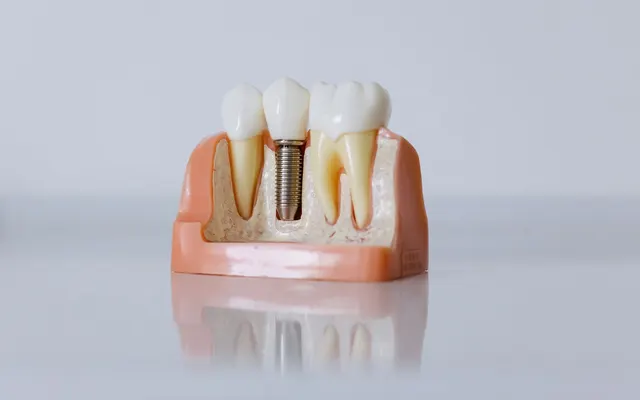
In 2020 the prosthodontic clinic of the University of Hamburg asked 100 patients and 16 dentists how much they wanted to be involved in decisions. The dentists were less willing to give up control than the patients were willing to take it. Decisions about tooth loss proved suitable for shared choice in both groups. The authors' example is the missing tooth: do nothing, an implant, a bridge. Advantages, disadvantages and risks are weighed, such as duration, invasiveness, treatment and maintenance costs, aesthetics.
The patient's preference changes from one decision to another: they want more autonomy over treatment choices than over diagnostic ones. For whoever writes the plan, the alternatives are not a courtesy paragraph. They are the part on which the patient decides.
Estimate and consent, two documents
When the patient agrees to begin, writes the Ministry, there must be a clear agreement with the dentist on the aims and nature of the treatment, the patient's responsibilities, the costs and the commitment required. The agreement may be verbal or implicit, but it is prudent to obtain consent, for the clarity of both. If the plan changes, the modifications and their consequences are explained. In complex cases the cost of each option must be set out, to avoid misunderstandings.
Informed consent is another document, with another content: it is in informed consent in dentistry.
The items of the estimate in Fibonacci
In the Dentistry product the estimate is always on. Each item carries the description, the tooth in FDI notation with the surfaces (for example "16 MOD"), the priority, essential or desirable, the number of sessions and the cost. The priority is chosen by you.
The costs add up exactly. An item without a cost is not worth zero, and the total declares it. The estimate is saved in the record as a proposal, that is, as a draft. The patient's acceptance is not recorded: if you want it in writing you write it in a note or in the consent.
The plan sits under the odontogram. The tooth you touch already shows the item written, and teeth with items in the plan have a mark. There are no tariff codes. The function is on the page about estimates.
Three example rows, fictional data:
| Tooth | Surfaces | Item | Priority | Sessions | Cost |
|---|---|---|---|---|---|
| 16 | MOD | Filling | essential | 1 | 120.00 |
| 36 | Crown | essential | 2 | 650.00 | |
| 11 | V | Aesthetic filling | desirable | 1 | no cost |
Total 770.00, and the total declares that one item is without cost.
Before handing over the plan
- Every item has tooth, surfaces, sessions, cost
- Priority chosen by you, item by item
- Alternatives written, including that of doing nothing, with advantages and disadvantages
- Times, number and frequency of check-ups
- Payment deadlines and methods; items without cost declared
- Consequences of refusal, explained and noted
- Patient's acceptance written in the record
- Plan changed: modifications explained, new estimate and consent